Understanding the Nature of Conflict
What is Conflict?
Conflict is something we all face, whether it’s in our personal relationships, at work, or even in our communities. It’s that raw emotion that bubbles up in tense situations. My first encounter with conflict was back in school, where arguments could erupt over the simplest of misunderstandings. I found that conflict brings about discomfort, challenging us to confront our differences directly.
When we think about conflict, it’s essential to recognize that it often stems from miscommunication or differing perspectives. Each person may have their own story and valid feelings that contribute to the overall situation. Understanding that everyone comes from a different background can help put things into perspective.
Additionally, conflict isn’t inherently bad. If approached thoughtfully, it can lead to deeper understanding and stronger relationships. It gives us an opportunity to learn about each other and ourselves more intimately.
Embracing Compassion Through Words
The Power of Language
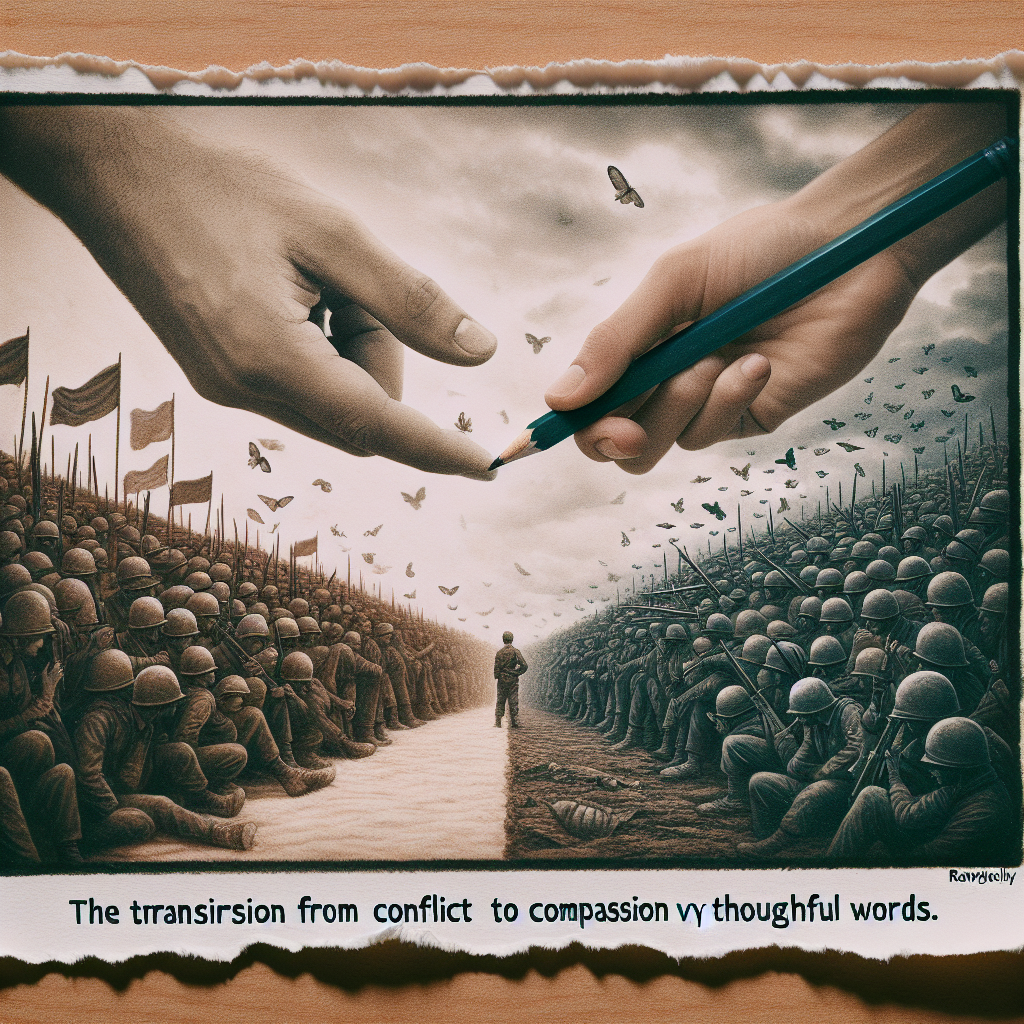
Language shapes our interactions and has the potential to soothe or inflame situations. I’ve learned over the years that thoughtful words can transform any conversation. They can build bridges where once there stood walls. Words hold such power—using positive, constructive language can lead to more fruitful discussions.
Let’s be honest: we’ve all said things we didn’t mean in the heat of the moment. But when I switched my focus to using kind, thoughtful words, I noticed that people responded better. It creates an environment of respect, where everyone feels safe to express themselves without fear of judgment.
This doesn’t mean we sugarcoat everything; rather, it means being mindful of how we communicate. By choosing words that reflect empathy, we can not only express our feelings but do so in a way that promotes understanding and connection.
Practicing Active Listening
Why Listening Matters
Active listening isn’t just about hearing someone’s voice; it’s about truly understanding what they’re saying. I can’t stress enough how transformative this practice is. During conflicts, I realized how often I was just waiting for my turn to speak, rather than genuinely engaging with the other person’s perspective.
When we listen actively, we validate the other person’s feelings and experiences. It shows that we care enough to hear their side, which can drastically reduce tension. In my experience, simply nodding and summarizing what the other person has said has built a level of trust that makes future conversations easier.
Moreover, listening allows us to learn. It gives us different viewpoints and can completely change our understanding of a situation. I’ve found myself humbled and enlightened after listening closely to someone’s story—it opens up avenues for meaningful discussion and compassion.
Choosing Compassionate Responses
Conflict Resolution Strategies
When responding to conflict, it’s easy to let emotions guide us. However, I’ve learned that taking a step back and approaching situations with compassion can turn the tide. It’s about responding instead of reacting. I often remind myself to breathe and think before I speak in these scenarios.

A great strategy I use is the “I feel” statement. For instance, instead of pointing fingers, I share how the situation affects me: “I feel overlooked when my ideas aren’t considered.” This method helps express my feelings without putting others on the defensive, fostering a better conversation.
Ultimately, compassionate responses require effort. It’s about showing empathy, being open to different outcomes, and working towards mutual understanding. Having this mindset can lead to resolving conflicts amicably and even strengthening relationships.
Nurturing Relationships with Thoughtful Communication
The Long-Term Benefits
Thoughtful communication doesn’t just get us through conflicts; it nurtures our relationships. I have cultivated deep connections by prioritizing kindness and understanding, and it’s truly rewarding. People tend to gravitate towards those who communicate with care, which creates a supportive network.
Moreover, fostering a habit of thoughtful communication helps build emotional resilience. Over time, I noticed I was less reactive and more confident in handling conflicts, as I had established a foundation of trust and openness. Relationships flourished when both parties felt valued and understood.
You also expand your skill set in conflict management. The more you practice these thoughtful communication techniques, the more adept you become at navigating difficult conversations. It’s all about growth and learning—every interaction becomes a chance to improve.
Frequently Asked Questions
1. What are some examples of thoughtful words?
Thoughtful words can include expressions of gratitude, acknowledgment of feelings, or phrases that show empathy, like “I understand how you feel” or “Thank you for sharing that with me.”
2. How can I improve my active listening skills?
Improving active listening involves practicing presence, maintaining eye contact, and refraining from interrupting. Summarizing what the speaker said can also enhance your understanding and engagement.
3. What if the other person isn’t being compassionate?
In such instances, it’s important to model compassionate behavior yourself. Remain calm and assertive, and draw their attention to their language without blaming them. This can sometimes encourage them to be more understanding.
4. How can I address conflict without escalating it?
To address conflict effectively, take a moment to breathe and gather your thoughts. Employ “I feel” statements to express your feelings and look for common ground to foster a collaborative resolution.
5. Can anyone become a better communicator?
Absolutely! Communication is a skill that can be developed over time. With practice, education, and a willingness to learn, anyone can improve their ability to communicate thoughtfully and compassionately.

Schedule Your First 20-Minute Coaching
Call With Us Today to see if we fit . You pick the price!
Click Here